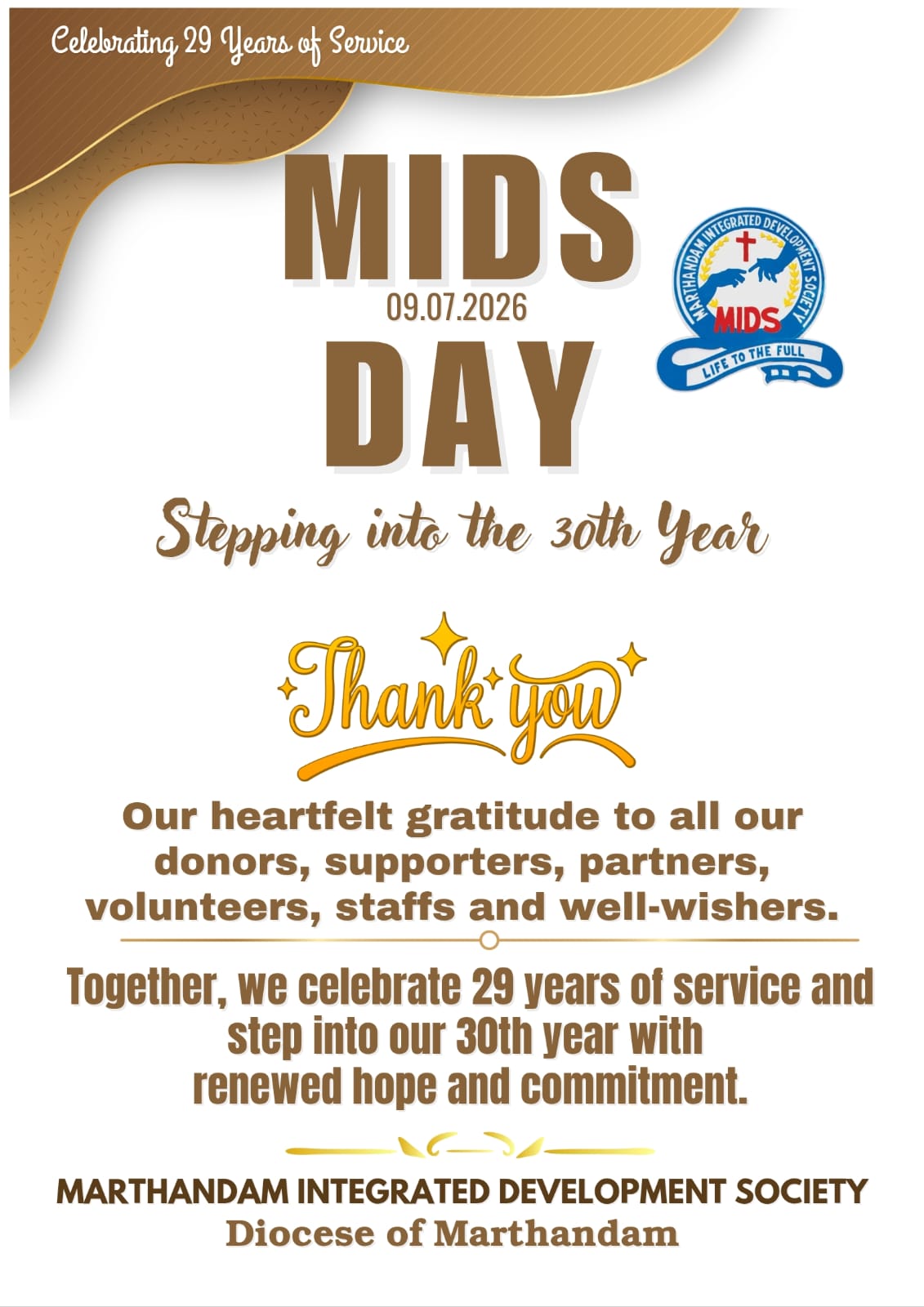
Celebrating Our 29 Years of Service.
Celebrating 29 Years of Service | Stepping into the 30th Year Today, we joyfully celebrate 29 years of dedicated service to humanity. Since 9 July 1997, Marthandam Integrated Development Society (MIDS) has remained committed to empowering marginalized communities through compassion, dignity, and sustainable development. As we step into our 30th year, we express our heartfelt gratitude to our donors, partners, volunteers, staff, beneficiaries, well-wishers, and everyone who has journeyed with us. Your trust and support have made every milestone possible. With renewed hope, faith, and commitment, we look forward to continuing our mission of transforming lives and building stronger communities. Together, we serve. Together, we grow. Together, we create hope. Thank you for being a part of the MIDS family.
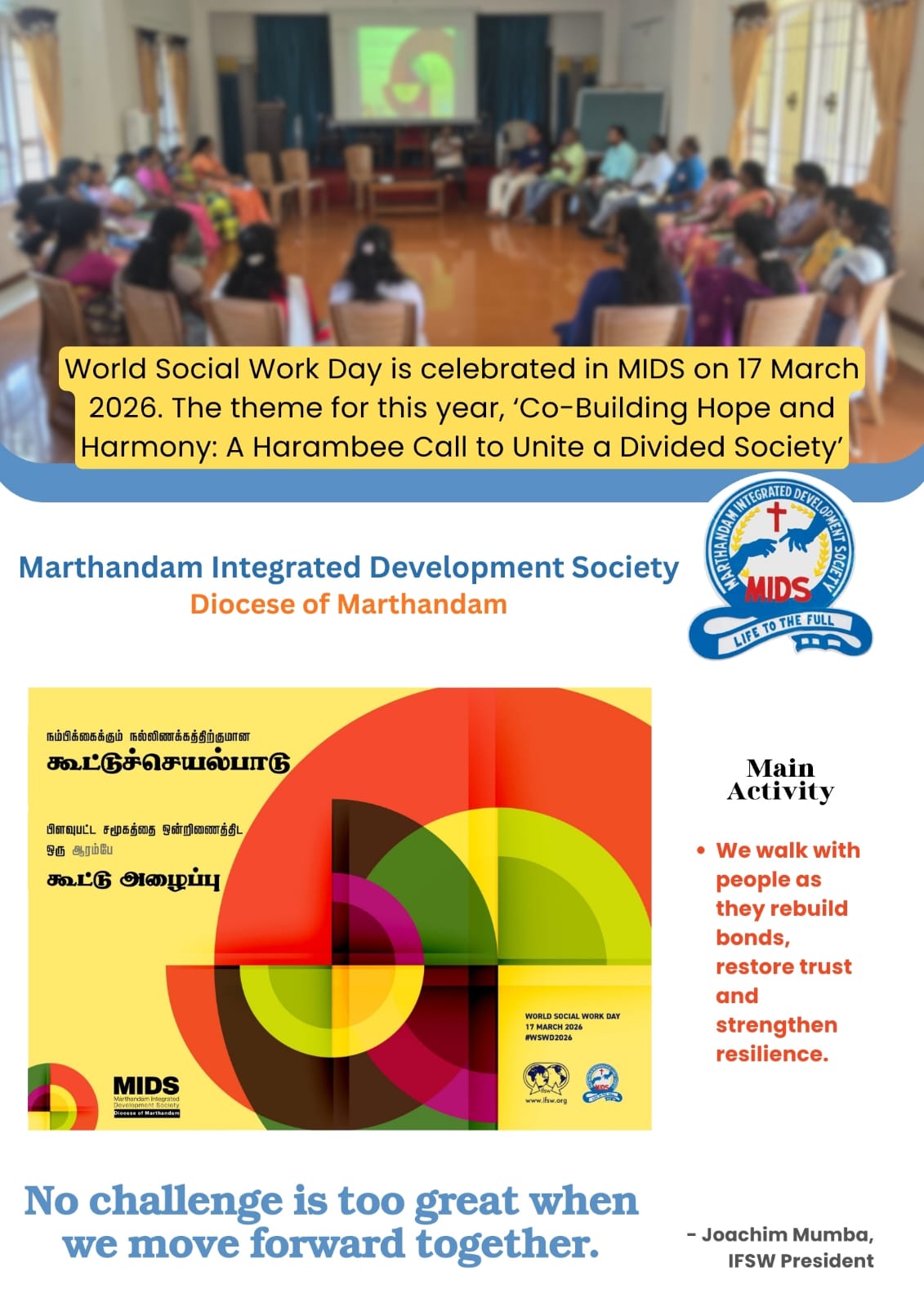
World Social Work Day 2026
Marthandam Integrated Development Society (MIDS) observed World Social Work Day on 17 March 2026 with meaningful participation and collective reflection. The program echoed this year’s theme, “Co-Building Hope and Harmony: A Harambee Call to Unite a Divided Society.” Through dialogue and shared experiences, participants emphasized rebuilding relationships, restoring trust, and strengthening community resilience. The celebration reaffirmed MIDS’ commitment to walking alongside people in creating a more inclusive and united society.

Caritas Asia Regional Safeguarding Webinar on Safe Recruitment
Staff from Marthandam Integrated Development Society (MIDS) participated in the Caritas Asia Regional Safeguarding Webinar on Safe Recruitment held on 12 March 2026 from 1:30 PM to 3:45 PM. The webinar brought together safeguarding representatives and staff from various Caritas organizations across Asia to strengthen understanding of safe recruitment practices and their role in protecting vulnerable communities. The session began with an opening prayer led by Bass Karo, creating a reflective start to the program. Mr. Jubili Anilik, Safeguarding Committee Member from Caritas Malaysia, introduced the session and emphasized the importance of safe recruitment in safeguarding. He highlighted that recruitment processes must ensure that organizations select individuals who respect the dignity and safety of the communities they serve. Mrs. Juliana Foo from Caritas Malaysia explained that safe recruitment is preventive in nature and should not be viewed as an act of mistrust, but rather as a responsible and ethical approach to protecting vulnerable people. She emphasized that safeguarding is a fundamental obligation for all Caritas organizations globally and must be integrated into every aspect of organizational functioning, including recruitment, staff training, programme implementation, and monitoring. The webinar highlighted several important elements of safeguarding systems within organizations: • Safe Recruitment: Vetting of staff and volunteers through background and reference checks. • Ethics and Code of Conduct: Establishing clear standards of expected behavior. • Risk Management: Conducting programme risk assessments and implementing preventive safeguards. • Complaints and Reporting Mechanisms: Creating safe reporting channels and protecting whistleblowers. • Data Protection: Ensuring confidentiality of victims and secure handling of safeguarding cases. The session also discussed the different individuals who may enter Caritas organizations, including employees, volunteers, consultants, partners, and interns, all of whom must comply with safeguarding policies. Mrs. Sunita Ashwin from Caritas India shared practical safeguarding measures adopted during recruitment. She described recruitment as the first safeguarding gate, as individuals recruited into the organization are often entrusted with direct access to children, women, and vulnerable communities. Therefore, safeguarding clauses should be included in job advertisements, behavior-based questions should be used in interviews, and candidates should undergo reference checks that focus on conduct and behavior. Candidates are also required to declare any history of misconduct and sign a Code of Conduct. She further explained the importance of safeguarding-focused reference checks, which help prevent the rehiring of individuals with a history of abuse or misconduct and ensure that organizations maintain accountability and trust. Another important practice highlighted was the affidavit mechanism used by Caritas India, where newly recruited staff submit a signed declaration confirming that they have no criminal convictions, pending criminal cases, involvement in misconduct investigations, or cases under the Prevention of Sexual Harassment (POSH) Act. Staff also provide consent for the organization to verify the information and acknowledge that any misrepresentation may result in termination. Mrs. Dini and Mrs. Ausi Indresh shared experiences from Caritas Indonesia, emphasizing the importance of safe recruitment during disaster response. They explained that although emergency situations require rapid mobilization of personnel, affected communities are highly vulnerable, and recruitment mistakes can create serious safeguarding risks. Therefore, Caritas Indonesia ensures that safeguarding standards are maintained even during emergencies. They noted that diocesan staff and parish volunteers require recommendations from the Bishop and Parish Priest, while professional health volunteers must obtain recommendations from their respective institutions. Background verification, reference checks, and self-declarations remain essential requirements even during emergency recruitment. The webinar concluded with a strong message that safe recruitment is a critical foundation for safeguarding, ensuring that humanitarian organizations uphold accountability, integrity, and protection for the vulnerable communities they serve. Participation in such regional learning platforms strengthens MIDS’ commitment to safeguarding and supports our mission to create safe and respectful environments in all programmes and community engagements.
Dilexi te
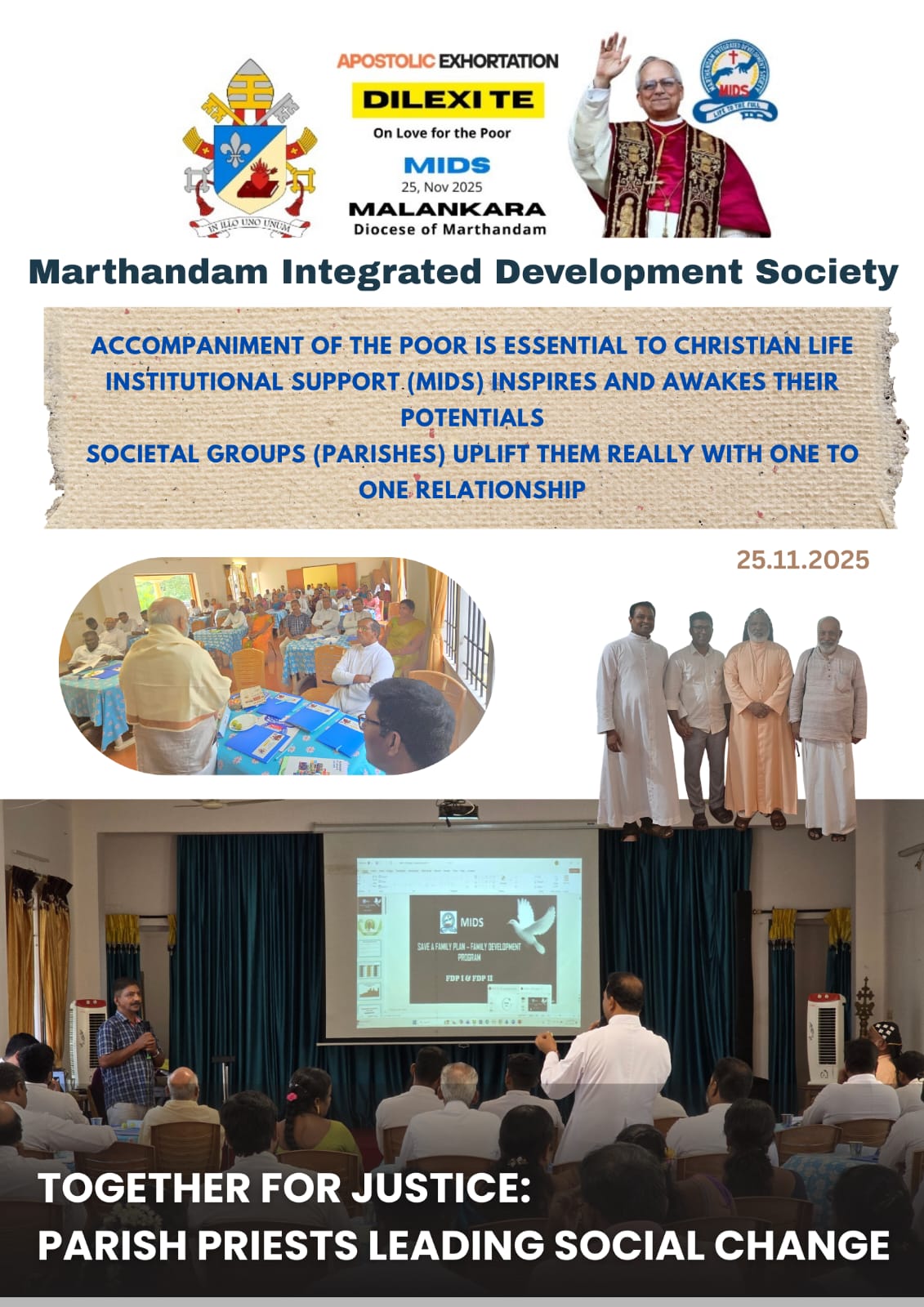
A special consultation programme brought together our Bishop, 40+ priests, and MIDS staff to reflect on our shared social mission. Together, we discussed how parishes and MIDS can better serve the poor with compassion and action. A step forward in strengthening our commitment to justice, care, and community upliftment.
Goat Rearing Initiative
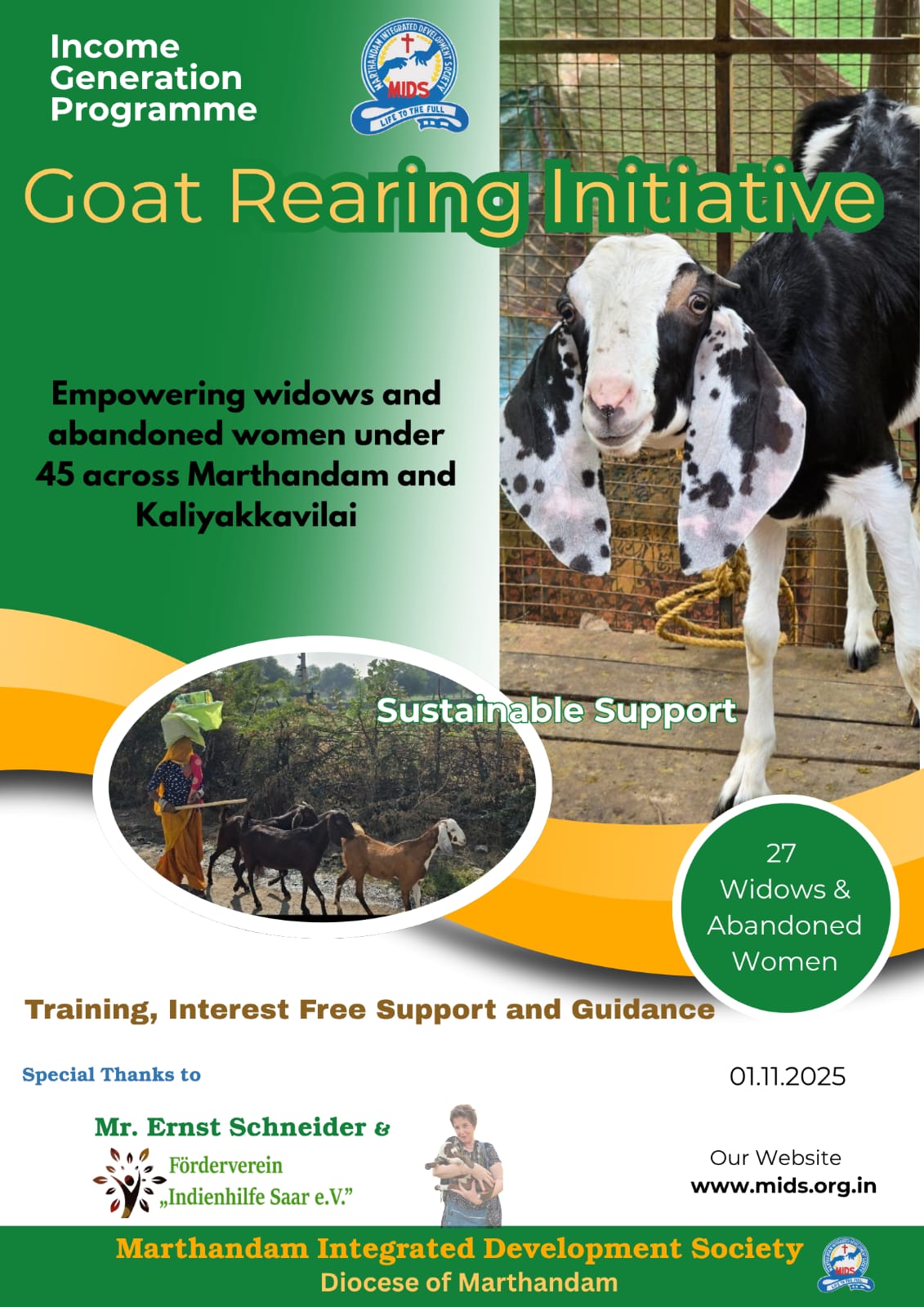
Goat Rearing for Progress is an income-generation initiative dedicated to strengthening the livelihoods of economically disadvantaged families in the Diocese of Marthandam. Through this humanitarian programme, 27 widows and abandoned women have been identified and supported with training, livestock assistance, and continuous capacity-building guidance. The initiative aims to empower vulnerable women to achieve financial independence, rebuild dignity, and lead a stable and fulfilling life. By promoting sustainable rural livelihoods, the programme contributes to long-term socio-economic resilience and uplifts families toward a future of self-reliance and hope.
MMWS Social Security Day
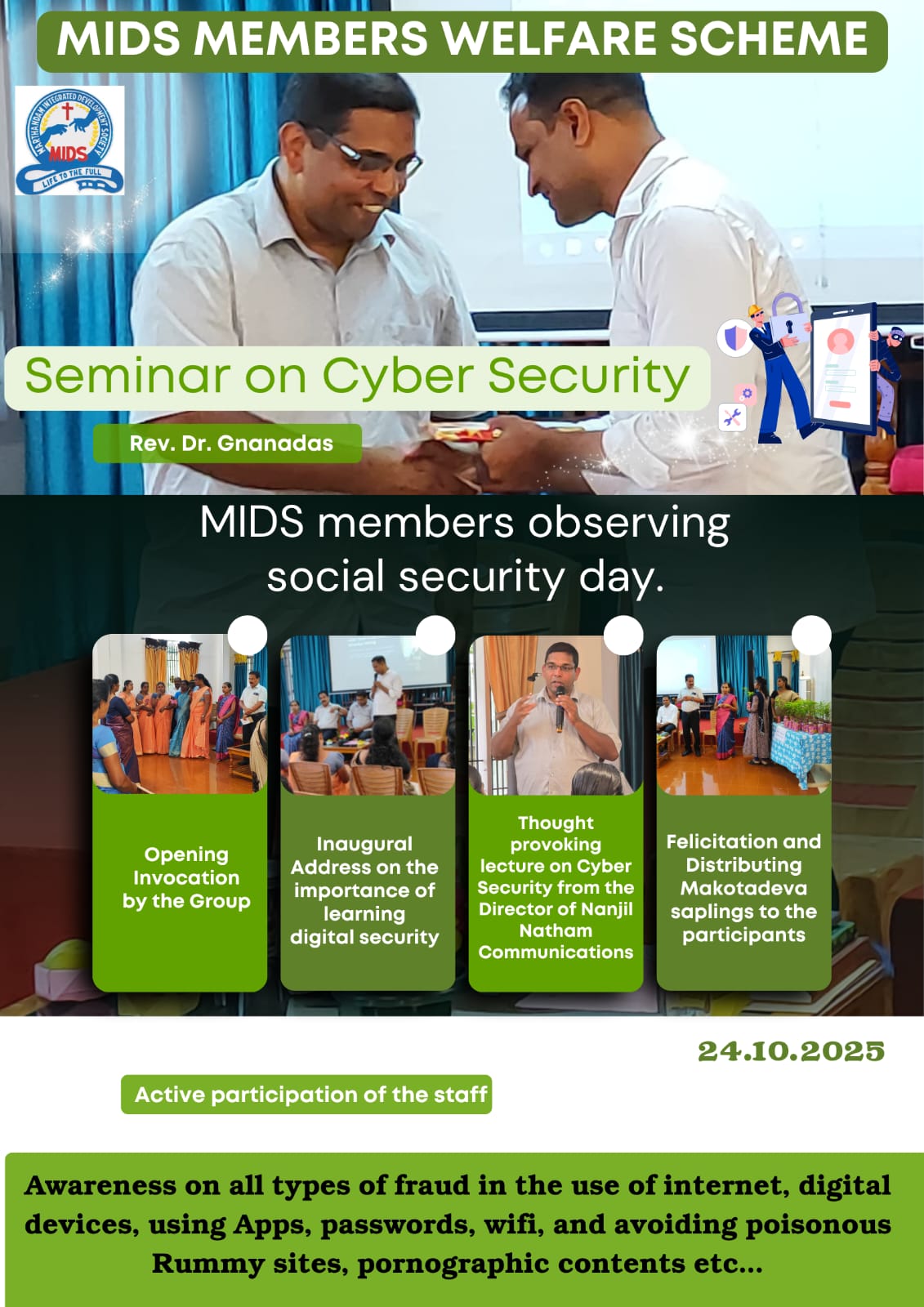
MIDS Social Security Day MIDS observed Social Security Day with a comprehensive awareness initiative focused on promoting safe and ethical digital practices among MIDS staff members.The session addressed the growing risks associated with internet misuse and digital exploitation, emphasizing proactive safety measures to ensure a secure online environment for all. Key topics covered included: Responsible and safe use of smartphones, computers, and internet services Identifying and preventing online fraud, cyber threats, and phishing scams Safe handling of passwords, OTPs, banking information, and personal data Dangers of unsafe public Wi-Fi networks and unverified applications Protection against cyber addiction, inappropriate digital content, and predatory online platforms, including illegal gaming and harmful adult websites. The program highlighted the importance of digital literacy for social well-being, especially for vulnerable groups such as youth and digitally-new users. Through interactive discussions and real-life case examples, MIDS staff gained practical knowledge to safeguard themselves and their families in an increasingly technology-driven world.